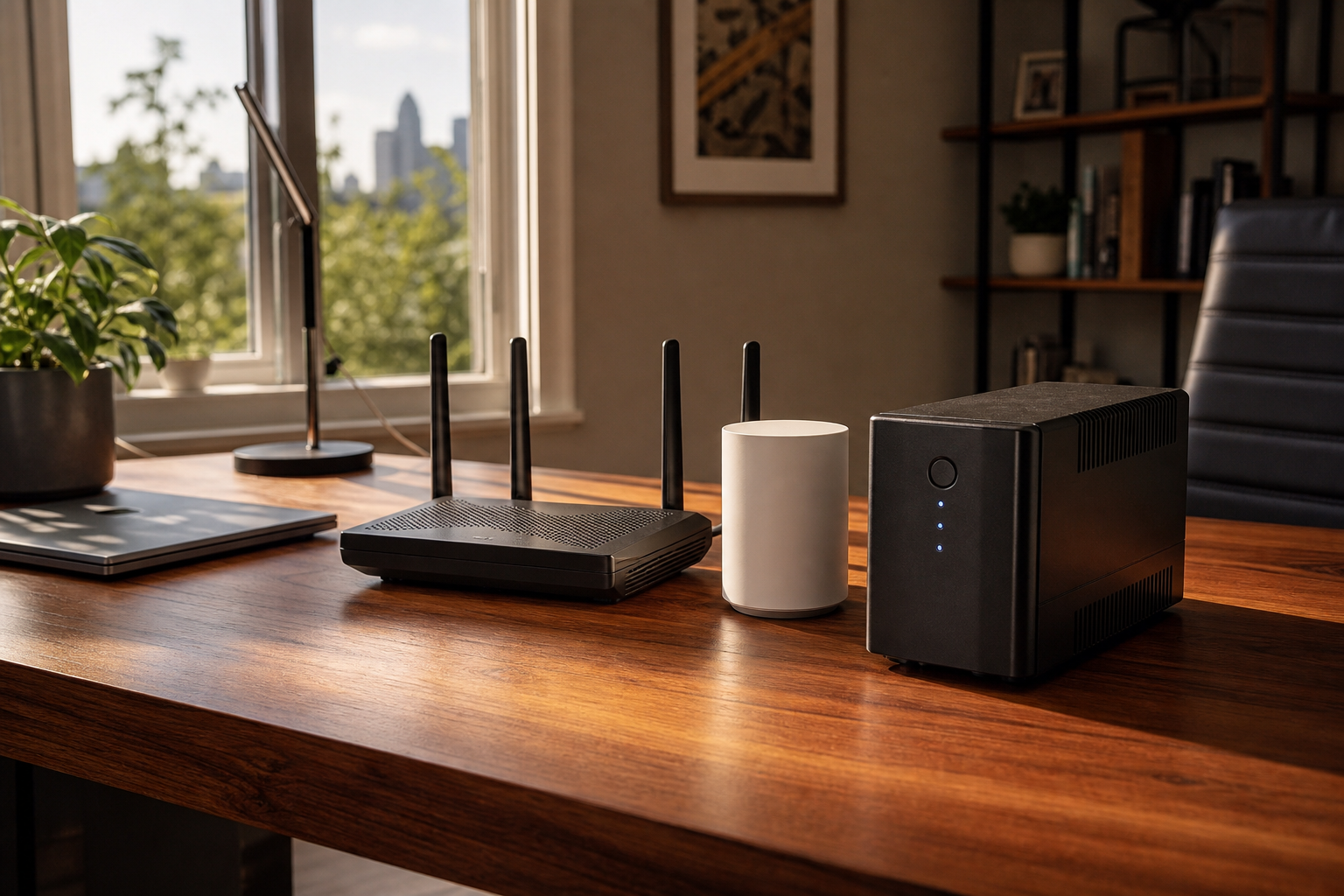
ERCOT is forecasting record-breaking power demand across Texas this summer, and Austin homeowners who rely on their home network, smart devices, and remote work gear have a real reason to prepare now before the hottest months arrive.
What ERCOT's Record Summer Warning Means for Your Household
On June 3, 2026, ERCOT released its Summer 2026 Outlook and projected peak demand could exceed 92.2 gigawatts - nearly 10% higher than last summer's record of 83,679 MW. Multiple Austin-area outlets covered it, including Community Impact Austin and the Austin Chronicle. The surge is driven by hotter projected temperatures and a wave of new large-scale energy consumers - data centers, industrial facilities, and cryptocurrency mining operations - joining the Texas grid this year.
ERCOT says an outright grid emergency is unlikely, citing nearly 11 gigawatts of new generation capacity added in recent months. But high-demand stretches still create real risks for homeowners: voltage fluctuations, brief brownouts, and conditions that quietly stress your connected devices at home.
If you work from home, run a smart home setup, or just rely on a solid Wi-Fi connection, here is what to do before the temperature spikes.
Your Router and Modem Can Overheat
This is the problem homeowners overlook most. Consumer-grade routers and modems use no active cooling - they rely entirely on passive ventilation through their vents and plastic casing. When ambient room temperature climbs, so does the internal temperature of your networking gear.
Signs your router is running too hot:
- Wi-Fi signal randomly drops or slows during the hottest part of the day
- The unit is too warm to hold comfortably for more than a few seconds
- Speeds are slower in the afternoon but recover overnight
- The device reboots on its own (a built-in thermal protection response)
What to do about it:
- Move it out of enclosed spaces. Cabinets, entertainment centers, and wire closets trap heat. Give the router at least 6 inches of clear space on all sides.
- Place it on a hard, flat surface elevated slightly to allow airflow underneath.
- Keep it away from direct sunlight and windows with afternoon sun exposure.
- Clean the vents. Dust buildup acts like insulation. A dry cloth or a quick pass with compressed air can drop operating temps noticeably.
- Consider a USB-powered cooling pad if the router runs warm even in a well-ventilated spot.
If your Wi-Fi drops consistently during Austin's afternoon heat peaks, our home network and Wi-Fi service can diagnose whether the issue is equipment heat, poor placement, or a deeper signal problem.
Surge Protection Is Not Optional This Summer
When the grid runs near capacity, voltage fluctuations become more common. A brief spike - even a fraction of a second - can damage or kill unprotected electronics: TVs, computers, smart home hubs, NAS drives, and network equipment.
A surge protector with a joule rating is the baseline. For anything you cannot afford to lose - a home office workstation, a NAS with backups, a mesh Wi-Fi system - you want an Uninterruptible Power Supply (UPS).
A UPS absorbs surges before they reach your gear, and keeps your devices running for a few minutes during a brief outage or brownout. That is enough time to save your work, let the router reconnect, and avoid losing smart home configurations.
Practical sizing guide:
- Router and modem only: 150-300VA
- Home office desktop, monitors, and networking gear: 650-1000VA
- Home media server or small equipment rack: 1000-1500VA
If you are protecting gear with variable-speed motors or high-end audio/video equipment, look for a UPS with pure sine wave output. For everything else, simulated sine wave is fine and more affordable.
Smart Home Devices and the Heat Factor
Most residential smart home gear is rated to about 104F (40C) internally. That sounds like plenty - until you consider that a smart thermostat on a south-facing wall, a hub mounted near an attic access, or a network extender in an uncooled closet can see ambient temperatures well above that during an Austin July afternoon.
Devices that overheat behave erratically: missed automations, false sensor readings, intermittent connectivity, or complete shutdowns. Zigbee and Z-Wave mesh networks are especially sensitive to range and signal degradation when devices are heat-stressed.
If your smart home has worked fine all year but starts acting up in summer, heat is often the culprit - not a firmware update or a cloud service issue.
When setting up or expanding a smart home system, our work from home and smart home setup service includes a placement review that accounts for heat exposure in your specific home.
WFH Users: A Quick Pre-Summer Checklist
A sustained internet outage during business hours costs more than inconvenience. Before peak heat arrives, run through these:
- Test your backup internet option. A mobile hotspot on a different carrier than your home ISP gives you a fallback when one provider has a localized issue.
- Check where your router lives. If your home office is in a garage conversion, a sunroom, or an upstairs room that stays hot, your router may be operating in heat you have never measured.
- Document your network. Note your router model, modem model, ISP contact number, and the Wi-Fi password. When something fails on a Tuesday morning, you will not want to hunt for this.
- Test your UPS battery. UPS batteries last 3-5 years. An older battery may test fine in mild conditions but fail under thermal load. Most UPS units have a self-test button - use it before summer peaks.
For a professional review of your WFH setup before temperatures climb, device troubleshooting and a full gear assessment is a smart pre-season step.
What to Do If Things Go Wrong Mid-Heat
If you hit a sudden outage or device failure during a hot stretch:
- Power everything down and let it cool for at least 20 minutes before rebooting.
- Check Austin Energy's outage map to rule out a local grid issue before blaming your equipment.
- If the device boots but Wi-Fi still drops, check your router's admin interface for temperature readings if it supports them.
- Persistent issues after cooling - slow speeds, dropped connections, unusual heat - usually mean the hardware needs attention before a complete failure.
We work with Austin homeowners on exactly these situations. If you have gear that keeps failing in the heat, reach out to us and we can assess whether the fix is a placement change, a hardware swap, or a full network redesign.
The Bottom Line
ERCOT's 2026 summer outlook is a concrete signal to check your home tech setup now, while temperatures are still manageable. Routers fail silently in the heat. Power fluctuations damage unprotected electronics. Smart home devices have thermal limits that Austin summers can push past. And a WFH setup deserves the same reliability planning that a small business gives its IT infrastructure.
Summer is here. Make sure your tech is ready for it.
Sources: ERCOT Forecasts Record Electric Demand This Summer, Community Impact Austin, June 3 2026 | ERCOT Predicts Record Summer Energy Demand, Texas Public Radio, June 4 2026