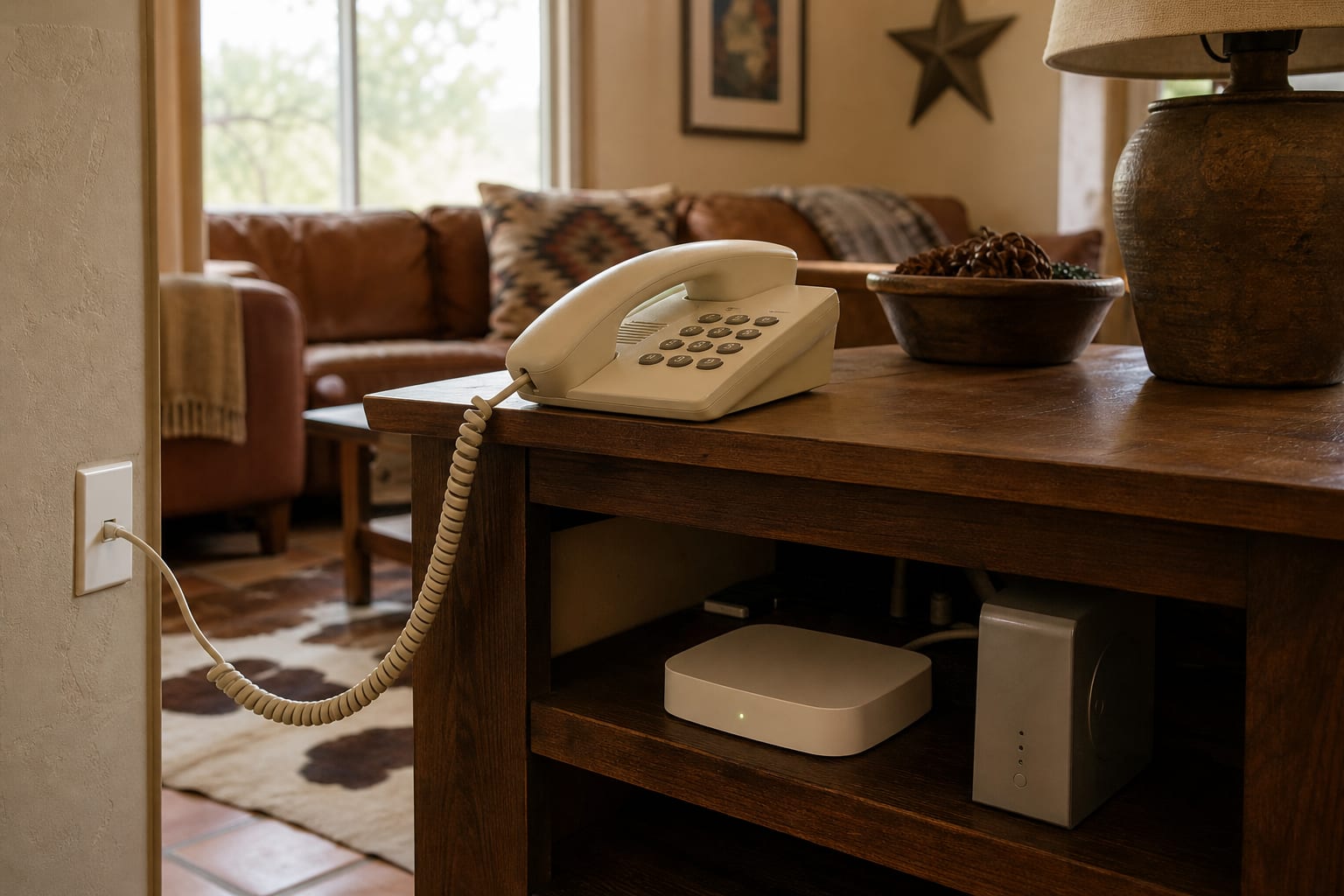
AT&T's federally approved filing lets it begin discontinuing old copper landline service in parts of Texas on or after November 15, 2026, so if anything in your Austin home still plugs into a phone jack, this weekend is a good time to find out what depends on it.
On November 12, KBTX reported that AT&T and Verizon are moving ahead with retiring copper-wire phone networks in communities across Texas. AT&T's date is November 15. Verizon's separate application for former Frontier service areas lists November 16. Back in January, Broadband Breakfast reported that the FCC automatically granted AT&T's application to discontinue service at wire centers serving about 90,000 customers across 18 states, and that affected customers were told in November 2025 that service could end starting November 15, 2026.
Closer to home, a wire center tracker built from FCC and carrier filings lists retirement notices on file for the Austin, Manchaca and Diamond wire centers. A notice on file does not mean your line goes dark on Saturday. It does mean the process has formally started, and that the old line in the kitchen is not something to assume will be there forever.
The first question most people ask is simple: "Does this affect me?" Here is how to answer it for your own house.
Is Your Home Still on a Copper Landline?
KBTX reported that AT&T said in October that just 1% of its eligible customers were still using legacy copper voice service, so most homes have already moved to phone service that runs through a fiber or cable modem, often without noticing. You are likely still on copper if:
- Your phone bill lists a traditional home phone line from AT&T and you have never had a fiber or VoIP phone installed.
- A corded phone plugged straight into the wall jack still gets a dial tone when the power is out.
- There is no box, modem or adapter between your phone and the wall jack.
If your phone plugs into the back of an internet modem or a small adapter, you are already on a digital line and this particular change does not touch you.
What in Your House Might Quietly Depend on the Landline
The phone on the wall is the easy part. The devices that worry us are the ones nobody thinks of as "phone service":
- Home alarm panels. Many older security systems report alarms to the monitoring company by dialing out over the phone line.
- Medical alert base stations. The pendant a parent wears often talks to a base unit that calls out over the landline.
- Fax machines still used for a home business, a pharmacy or a doctor's office.
- Gate call boxes and older intercoms in some neighborhoods and condo buildings.
- TTY devices and amplified phones set up for someone with hearing loss.
The same tracker points out that the commercial side has fire alarm communicators, elevator phones and access control systems on these lines too. If you manage a small office or a rental property, check those as well.
Landline Phase-Out Checklist for Austin Homeowners
Set aside an hour this weekend and work through this list.
1. Read your mail and your phone bill
KBTX reported that AT&T is notifying customers several times through letters, emails, text messages and phone calls, and that each customer gets a specific date to upgrade. Verizon said it will send advance written notice and will not discontinue existing copper voice service until an FCC-approved replacement is available at the address. If you have a letter, note the date on it.
2. Verify any notice before you act on it
Any time a real company sends "your service is ending" messages, the same wording becomes easy to copy. If a text or call pushes you to pay, click a link or read out a code to keep your phone working, hang up and call the number printed on your paper bill instead. A genuine upgrade can be confirmed that way, every time. Our scam protection service exists for exactly this kind of second opinion.
3. Walk the house and list what plugs into a phone jack
Follow the phone cords. Look behind the alarm keypad's control box (often in a closet or garage), the medical alert base station, the fax machine and anything with a cord running to a wall jack. Write each one down.
4. Call the companies behind those devices
Call your alarm monitoring company and your medical alert provider and ask one direct question: "What do I need if my copper landline goes away?" Many offer a cellular communicator or a cellular base unit. Ask them to run a test signal after any change, and stay on the line until they confirm they received it.
5. Pick the replacement that fits how you use the phone
KBTX reported that replacement options may include fiber or wireless-based phone service, and that customers should contact their provider to see what is available at their address. Broadband Breakfast reported that AT&T is offering a landline replacement service on its broadband networks, or a mobile line. Which one is right depends on the house:
- If the landline is mostly a number relatives know, a digital home phone through your internet provider usually works with the phones you already own.
- If it exists mainly for the alarm or medical alert, the device's own cellular option may matter more than the phone itself.
- If you want to keep the number, ask about porting it before you cancel anything. Cancelling first can lose the number.
6. Plan for the next power outage
This is the part people miss. A copper line gets its power from the phone company, which is why an old corded phone keeps working when the lights go out. Digital phone service runs through equipment in your house that needs electricity. After the switch, ask your provider how long its backup battery lasts, and consider putting your modem, router and phone adapter on a small battery backup. After a Central Texas ice storm, that is the difference between a working phone and a dead one. If your network gear lives in a closet with a tangle of cables, our home network and Wi-Fi service can tidy it and put the important pieces on backup power.
7. Confirm your 911 address
With a digital phone line, the address dispatchers see comes from what is registered on the account. When the new service is set up, confirm that the registered address is your home address, unit number included.
If a Parent or Grandparent Still Relies on the Landline
The households that feel this most are often older relatives who have used the same number for decades. A few things make the change easier:
- Keep the same phone number if at all possible, so friends and doctors can still reach them.
- Keep the familiar phone handset if the new service supports it.
- Write a one-page note by the phone: who provides the service now, the support number from the bill, and what to do if the line is silent.
- Test the medical alert pendant together after the change, from the room where it is most likely to be needed.
Our tech tutoring sessions are built for exactly this kind of patient walk-through, and we are happy to talk with the whole family on speakerphone.
The Short Version
AT&T can begin discontinuing legacy copper voice service under its approved filing on or after November 15, and Austin-area wire centers have retirement notices on file. Check whether you are still on copper, list what plugs into the jack, call the alarm and medical alert companies, verify any notice by calling the number on your bill, and put your phone equipment on backup power before the next outage.
If you would rather have someone check the jacks, the alarm panel and the network closet with you, book a visit or call us at 512.554.4790. We will tell you plainly whether you need to change anything at all.