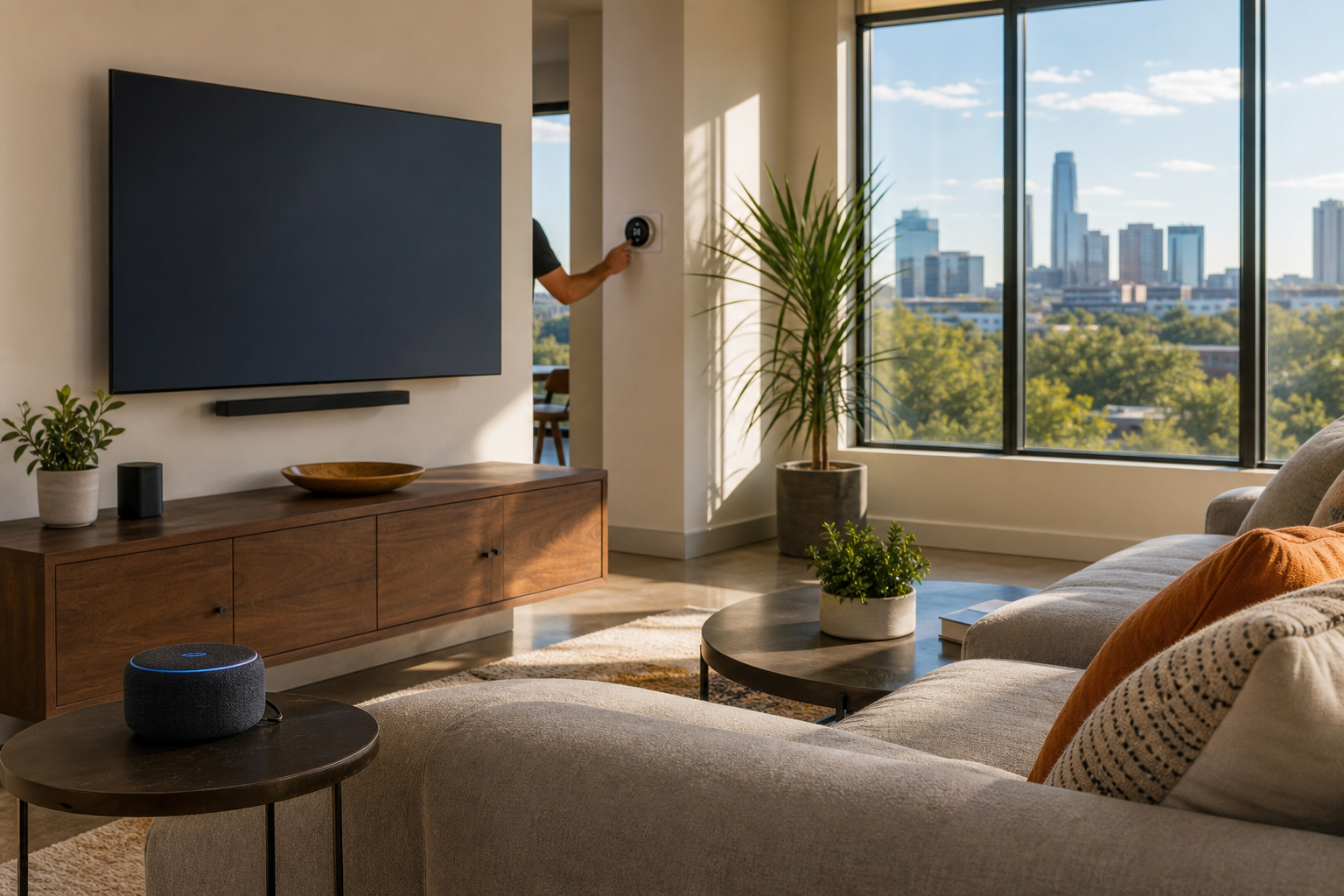
A Google server failure on August 18 froze Nest Hubs and smart speakers for nearly 12 hours, and Austin homes that lean on the cloud felt every minute of it. Voice commands failed, morning routines never fired, and smart displays sat on a blank screen or an endless spinning wheel from before sunrise until mid afternoon. Nothing was wrong with the hardware in anyone's house. The problem lived on servers far away, and there was nothing an owner could do from the couch to fix it.
We install and troubleshoot this gear in Austin homes every week, so Monday's outage was a useful stress test for the whole idea of the connected house. Here is what actually broke, why it broke, and five practical steps that turn the next cloud outage into a shrug instead of a scramble.
What actually broke on August 18
Starting a little after 2:30 a.m. Central, Google Home and Nest devices around the world stopped responding. Nest Hubs, Nest Minis, older Google Home speakers, and even some third-party displays with Google Assistant built in were affected. Reports piled up on Downdetector through the morning, and coverage from outlets like Android Central and 9to5Google described the same symptoms everywhere: frozen screens, broken voice commands, and automations that silently failed. Service came back around 2:25 p.m. Central, roughly twelve hours after it went down.
Two details matter for homeowners. First, this was a server-side failure. Rebooting your speaker, your router, or your whole house changed nothing, because the outage was not in your house. Second, Google had no clear public status page for these products while it was happening, so millions of people spent the morning unplugging things that were never broken.
And it was not the only cloud dependency story this week. A smart pet feeder brand's servers also went down for days, and feeders across the country simply skipped meals. Different company, same lesson.
Why a smart home outage feels so dumb
Most mainstream smart-home gear routes its intelligence through the manufacturer's cloud. When you ask a speaker to turn off a lamp six feet away, that request often travels to a data center and back before the lamp hears about it. When the data center is down, your voice, your app, and your schedules all go with it, even though the speaker, the bulb, and your Wi-Fi are working fine.
That design is convenient for manufacturers, but it means your house has a hidden dependency you never see on a spec sheet: someone else's uptime. There is a better pattern, called local control, where a hub inside your home runs the automations and the cloud is only needed for remote access. Newer standards like Matter and Thread push in that direction, and platforms like Apple Home and Home Assistant can run most things locally. Gear chosen with that in mind kept working right through Monday's outage.
Bad timing: this happened in a heat advisory week
The outage would be an annoyance in April. This week it had higher stakes. The National Weather Service has Austin under a Heat Advisory into the weekend, with highs around 104 and heat index values that KXAN and the Statesman report could reach 110 or more along the I-35 corridor.
The good news is that Nest thermostats kept regulating temperature on their stored schedules during the outage; it was mostly app and voice control that vanished. But plenty of Austin homeowners did not know that, and did not know how to work the thermostat from the wall because they had not touched it in two years. In a 104-degree week, "I think the AC is still fine" is not a comfortable sentence. Knowing exactly what your critical devices do without the cloud is the difference between a calm morning and a panicked one.
Five steps to outage-proof your Austin smart home
None of this requires ripping anything out. It is an hour of homework and a few smart choices the next time you buy a device.
1. Learn the manual overrides before you need them
Every smart device with a physical job has a fallback: the thermostat has controls on the unit itself, the garage door opener has a release cord, most smart locks take a physical key or have a keypad that works offline. Find each one now, while nothing is wrong, and show everyone in the house.
2. Map what actually depends on the cloud
Walk the house and list every connected device, then mark which ones keep working with the internet up but the vendor's servers down. You will be surprised. Cameras, doorbells, pet feeders, sprinkler controllers, and voice assistants are the usual suspects. Anything on that list that touches safety, comfort, or a living creature deserves a backup plan.
3. Choose local control for anything critical
When you replace or add gear, prefer devices that work over Matter or Thread, hubs that run automations inside the house, and cameras that record to a local card or drive instead of cloud-only storage. If footage or files only exist on a company's servers, they are one outage or one discontinued product away from gone. Keeping your own copies is the same principle we push for data backup and recovery: the copy you control is the one you can count on.
4. Keep your own network solid
Local control only helps if your home network is healthy. A router that drops connections or a dead zone in the back bedroom turns even well-designed local devices into flaky ones, and it makes every outage harder to diagnose because you cannot tell whose fault it is. A clean, well-placed home network and Wi-Fi setup is the foundation the rest of the smart home stands on.
5. Test your house offline once a season
Pick a quiet half hour, unplug the internet, and watch what happens. Which lights still respond? Does the lock keypad work? Do the cameras keep recording? Twenty minutes of testing tells you more than any product page will, and it turns the next real outage into something you have already rehearsed.
If Monday exposed some weak spots
If the outage left your displays frozen long after Google fixed things, or you found devices you cannot identify, or the map-the-house exercise sounds like a Saturday you would rather not spend, that is the kind of visit we do all the time. We can audit what depends on what, set up local-first control where it matters, and untangle devices that never quite recovered from an outage.
Ryse Technology is Austin-based and comes to you, from Allandale to Circle C. Book a visit or get in touch and we will make sure the next time the cloud stumbles, your house barely notices.